
Laser treatment
for existing pigment.
If you have had micropigmentation before, talk with Eliza about whether laser fading is suitable for you and what result you can realistically expect.
Enquire about laser treatmentHow long does it take?
- One sessionAs a general guide, laser application for pigment removal can take 10–30 minutes, depending on the area. The full visit can take longer if it includes assessment and preparation.
- Between sessionsThe skin needs time to heal. Guidance for laser pigment removal gives roughly 6–8 weeks as a general reference. Your own interval is decided after assessment.
- Overall durationSeveral sessions may be needed, so the process can take a few months. The number depends on the pigment colour, size of the area and how your skin responds.
General timing guidance. NHS session guide · Intervals between sessions
What to expect
Pigment assessment
Share when you had micropigmentation, any touch-ups and any previous removal treatments. You can send a recent photo in natural light. At the assessment, you can discuss your skin, the pigment colour and whether a small test spot would be useful.
During the session
The laser uses short pulses to break up pigment particles. You may feel stinging or warmth. Appropriate eye protection is essential, especially when the area being treated is close to the eyes.
After the session
The area may be red, swollen or tender for the first few days. Pigment can fade gradually over the following weeks. Ask when to come back to review how your skin responded and discuss the next step.
Before and after
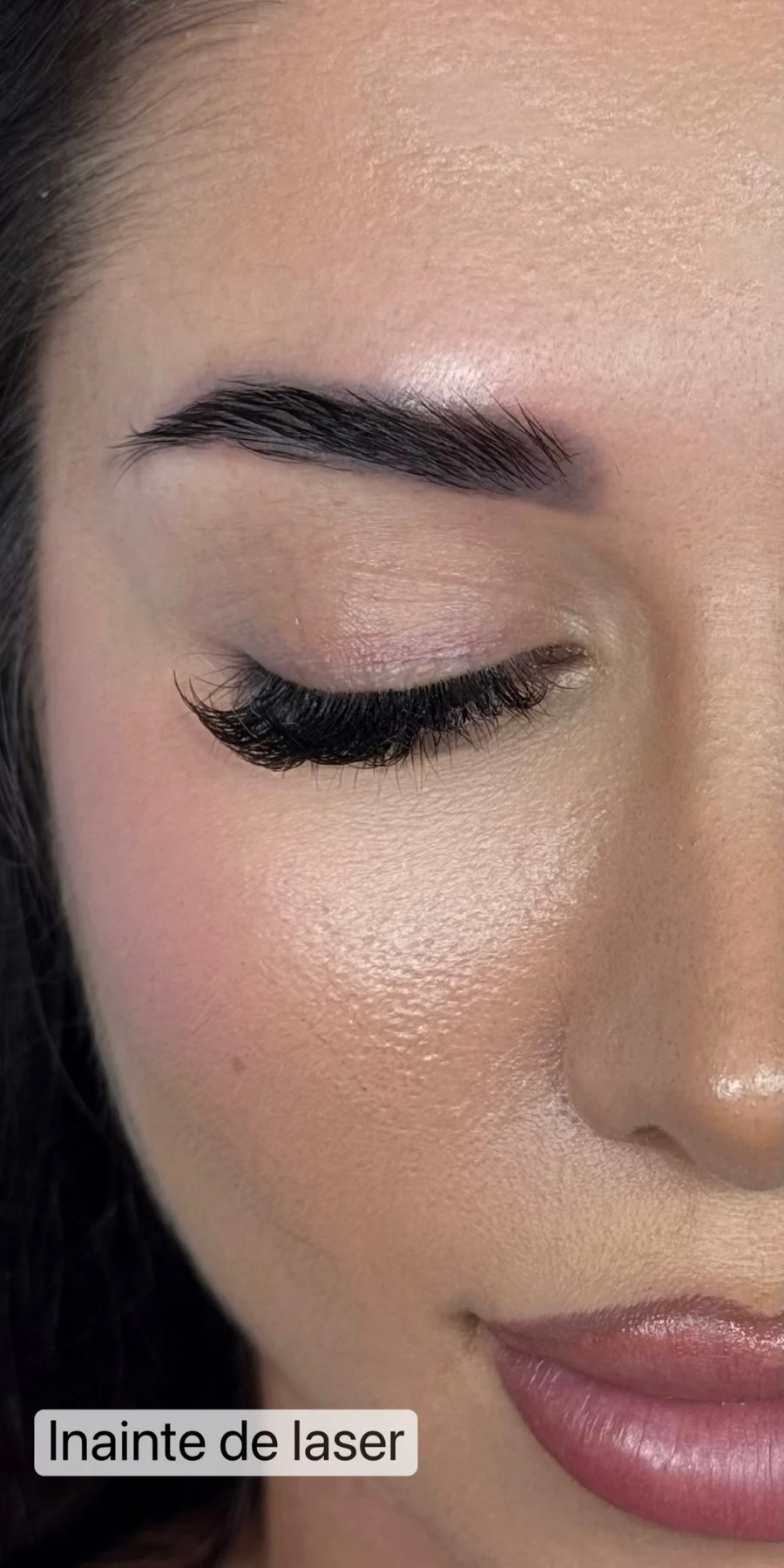
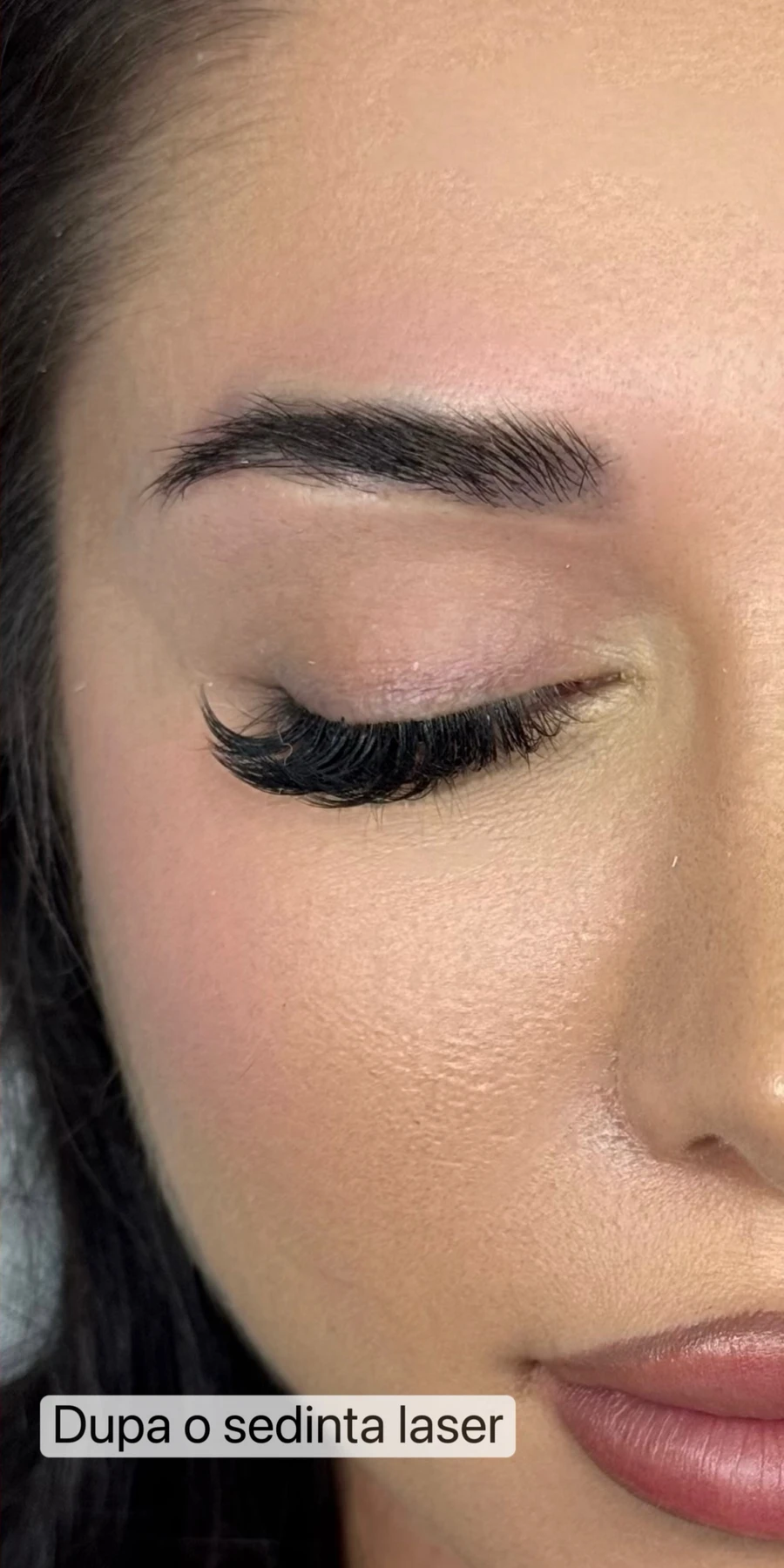
These two photos show the same case before laser treatment and after the first session. Results vary from person to person.
Questions before booking
How should I prepare?
Let the provider know in advance about any medication, a recent tan or irritated skin in the area. Ask what to avoid before your session. On the day, follow the instructions you receive about arriving with clean skin and no makeup or products on the area.
What risks should I know about?
Blisters, scabs or lighter or darker patches of skin can occur. Infection and scarring are also possible. Some cosmetic pigments may darken after laser treatment. Complete removal is not possible in every case.
How do I care for the area after laser treatment?
Follow the instructions you receive for cleaning and sun protection. Avoid rubbing the area or picking scabs. Ask when to resume makeup, swimming or sauna use, depending on how your skin is healing.
When should I seek medical advice?
Seek medical advice promptly if redness spreads, pain worsens or you notice discharge. Eye pain or vision changes after treatment near the eyes need urgent medical assessment.
How much does it cost and when can I book?
Pricing, the time to set aside for the visit and availability are confirmed directly. You can start by requesting a consultation and sharing a recent photo on WhatsApp.
More information on risks and aftercare. Options and results (FDA) · Laser aftercare (NHS)